. Any information published on this site will be valid in relation to Science Tokyo.


Summer Exchange Research Program(SERP) Karlstad University 2022, Feb. ~ 2022, Mar.
Year of Study: |
D2 |
|---|---|
School: |
Electrical and Electronic Engineering |
Country / Region: |
Sweden |
University / Institution: |
Karlstad University |
Program Duration: |
2022, Feb. 5th ~2022, Mar. 30th |
Program Name: |
Outline of Host University
Karlstad University is located in Karlstad, Sweden, a small city located right on the north of Vänern Lake, the largest lake in Sweden. The city is located right in between Oslo and Stockholm, and can be reached by either bus or train. The university started as a teacher education institute in 1843 before finally achieving the full-fledge university status in 1999. The university has 40 educational programmes, 30 programme extensions, and 900 courses across humanities, social studies, science, technology, teaching, health care, and arts.
The university is known for its close interaction with the community, with all the education and research underpinned by a close dialogue with public organisations and private businesses. Research works in Karlstad University also underline interdisciplinary cooperation to reach a holistic goal.
Preparation for Study Abroad
The preparation for this study abroad is a tad special considering the global pandemic circumstances. It was supposed to be held in the summer of 2021, however the plan was delayed until February 2022.
The application for the Summer Exchange Research Program (SERP) in Tokyo Tech was held in December to January prior to the program, with the information announced a few weeks before the deadline and interviews. During the preparation, the candidates were also responsible to initiate contact with prospective supervisors in their intended university. The consent of the supervisor is necessary for the application.
Following the acceptance, due to the rapidly developing travel regulations both in Japan and Sweden, it was crucial to stay up to date to the information, both from the Japanese government sources and the Swedish government sources, and to go through the information in detail especially regarding special requirements and permissions. Other information regarding local regulation, living cost, etc. was obtained through internet searches and discussion with friends who were living in Sweden.
Prior to departure, Prof. Jorge Solis (supervisor) and I conducted several online meetings to discuss my interest and possible research topics that could be covered by the undergoing projects in Karlstad University. As the topics were not directly related to my current research, I also had to do some independent studies on fundamentals of machine learning, neural network, forecasting, etc. Due to the delay on the departure, I also had the time to refamiliarize myself with the software that would be used in the project, MATLAB, for the specific machine learning purpose.
In the first month of the project, I spent most of time for literature studies on similar past works and reviewing the draft of the code that would be modified for the project. At the same time, I also tried to get accustomed to the interface and functions of the energy control and weather station systems. Through this process and discussion with Prof. Solis and other colleagues, an issue with the energy control system were identified before we embarked onto the experiment step of the project.
Using MATLAB, Long Short-Term Memory (LSTM) model were used as the machine learning model. Data are collected from the solar energy system and additional weather data at a weather station close to the PV system. In the first step of the study, we evaluated the performance of the model adjusted different parameters of the model to improve the forecasting performance. For the second step, we considered the impact of weather data as inputs to the machine learning model to the forecasting output. In order to do that, the Global Horizontal Index measured by the weather station was processed to estimate the actual solar irradiation received by the solar panel arrays. The processed data was then included as training input along with the historical solar production data.
Other algorithms besides LSTM were not considered in this current work due to time limitation, and the additional complexity involved with multiple inputs. In the future, the addition of other processes in the model such as Kalman Filter should be explored to increase the performance of the forecasting model
Due to the nature of the work and the pandemic, most of the works were done independently with some regular discussions with Prof. Solis and other colleagues who were supporting the projects.
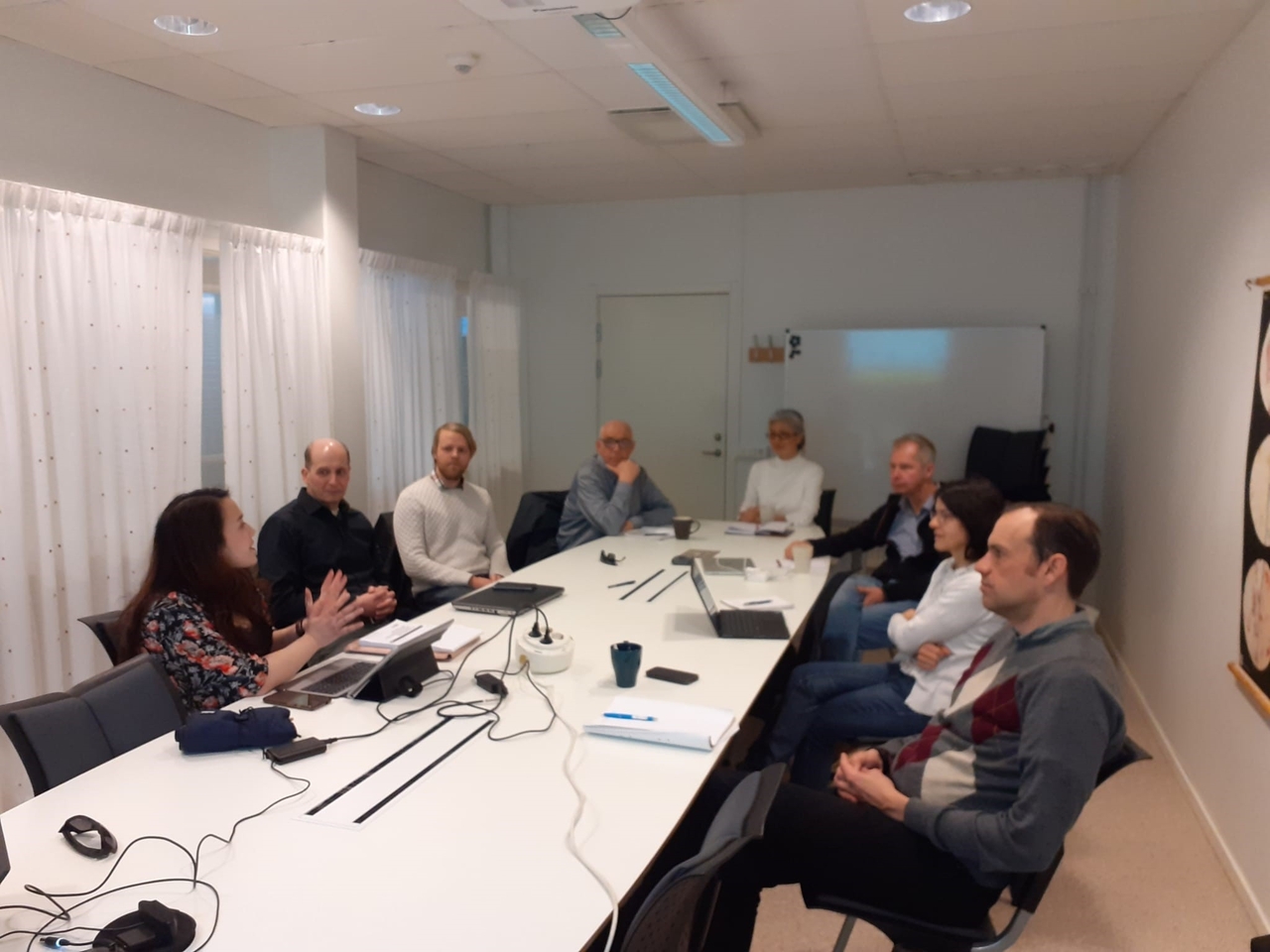
Preliminary report with the consortium members
Activities and Experience Outside Research
Two aspects of Karlstad I appreciated the most were the accessibility of everything the city has to offer either by leisure walks or relatively short bus rides. Almost every weekend, I spent my time exploring different walking trails in the forests by Vänern Lake and enjoyed the different perspectives of the lake. On weekdays, once the daylight got longer, I was able to take afternoon walks around the city either on my way back from the university or before dinner time. The difference in life pace and atmosphere to a busy megapolitan like Tokyo was stark, and I found myself relaxing and relishing in the lack of hubbub and more personal interaction with strangers on the streets.
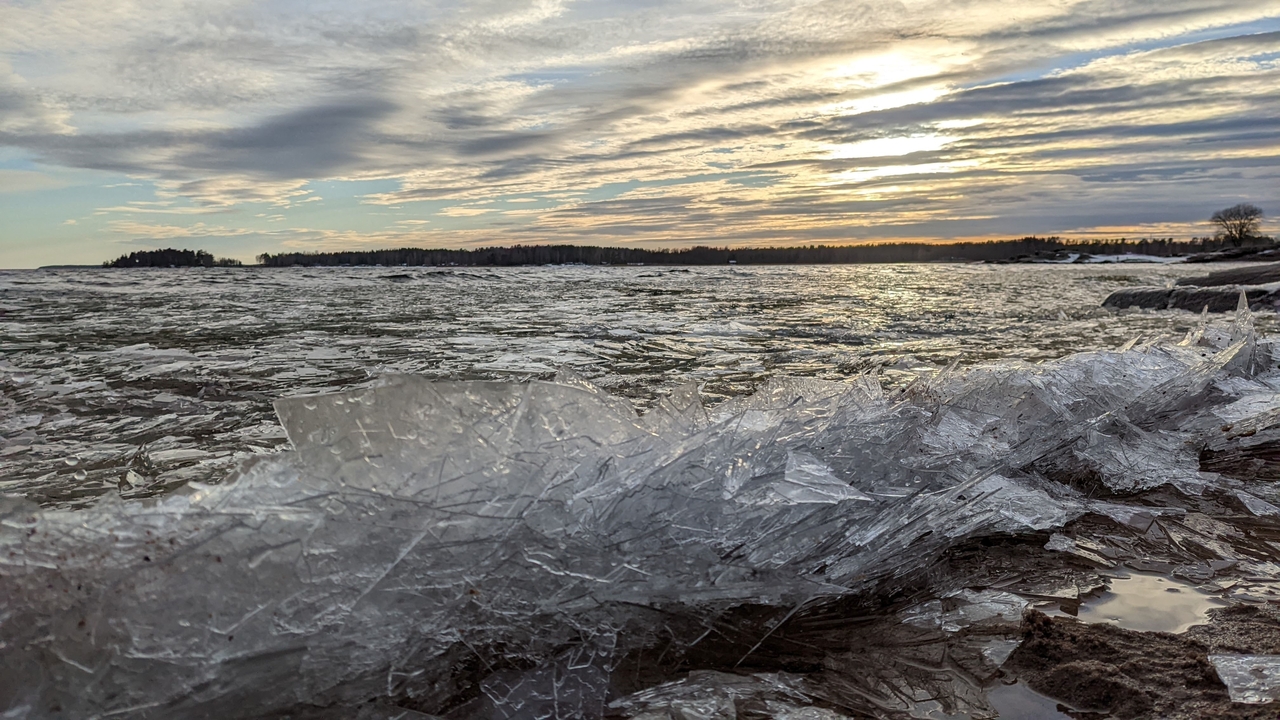
Broken ice at the beach of Lake Vänern
As mentioned before, Karlstad is located halfway from Stockholm to Oslo. I took the rare chance of being in such a strategic place in Scandinavia to visit some of my friends in the region. I spent a couple of weekends exploring Stockholm, especially the older part of the city: Gamla Stan and Södermalm, and some other historical places and museums. Taking the advantage of the proximity to Oslo, I also decided to visit an old friend who happened to live in Tromsø, Norway close to the Arctic circle. During the visit the weather was delightfully clear that I had the fortune to be able to see the Northern Light in the evenings.
-
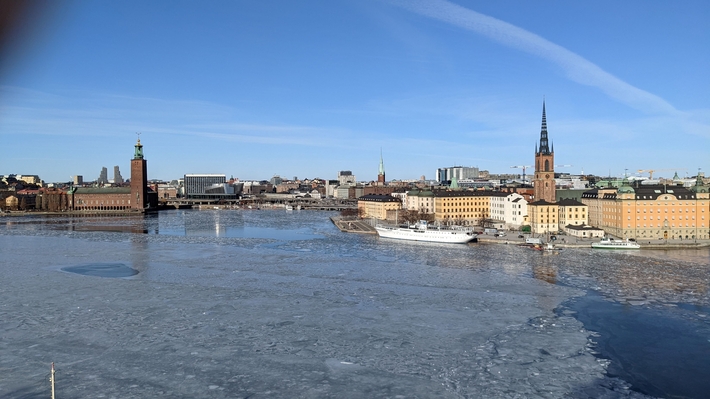
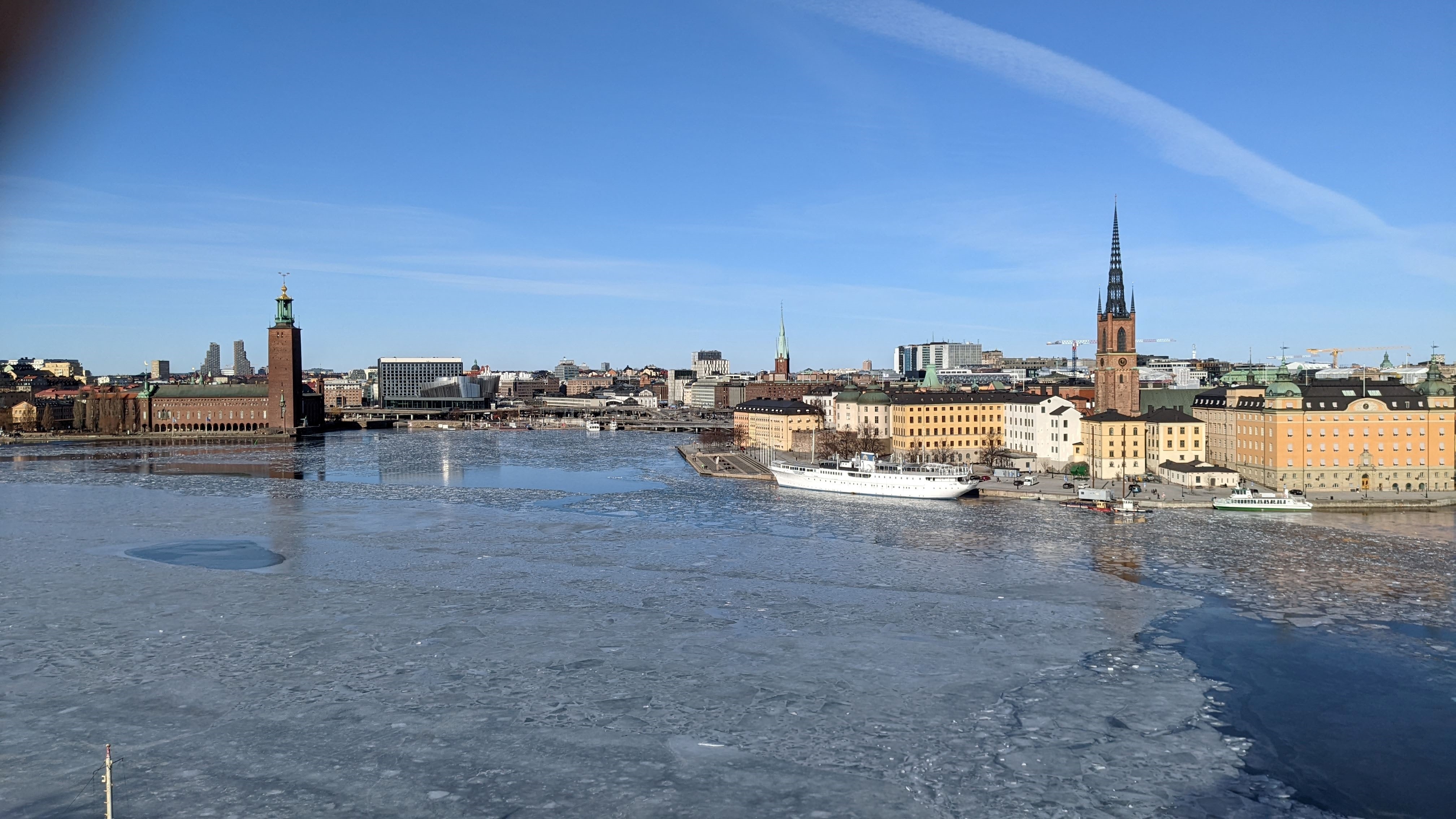
View of the city from the only natural hill in Stockholm (Södermalm, Stockholm)
-
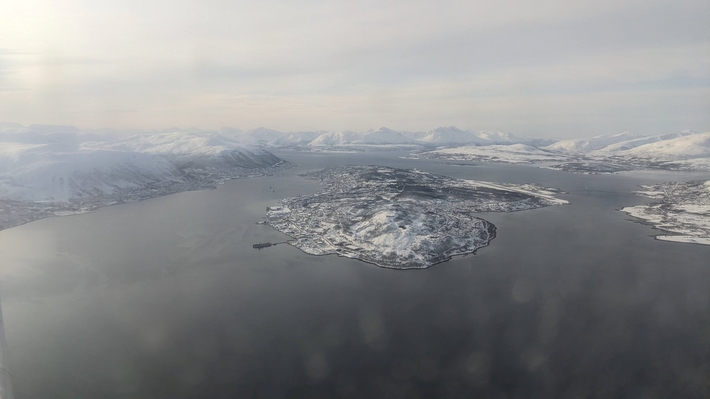
Tromsø, Norway from air
-
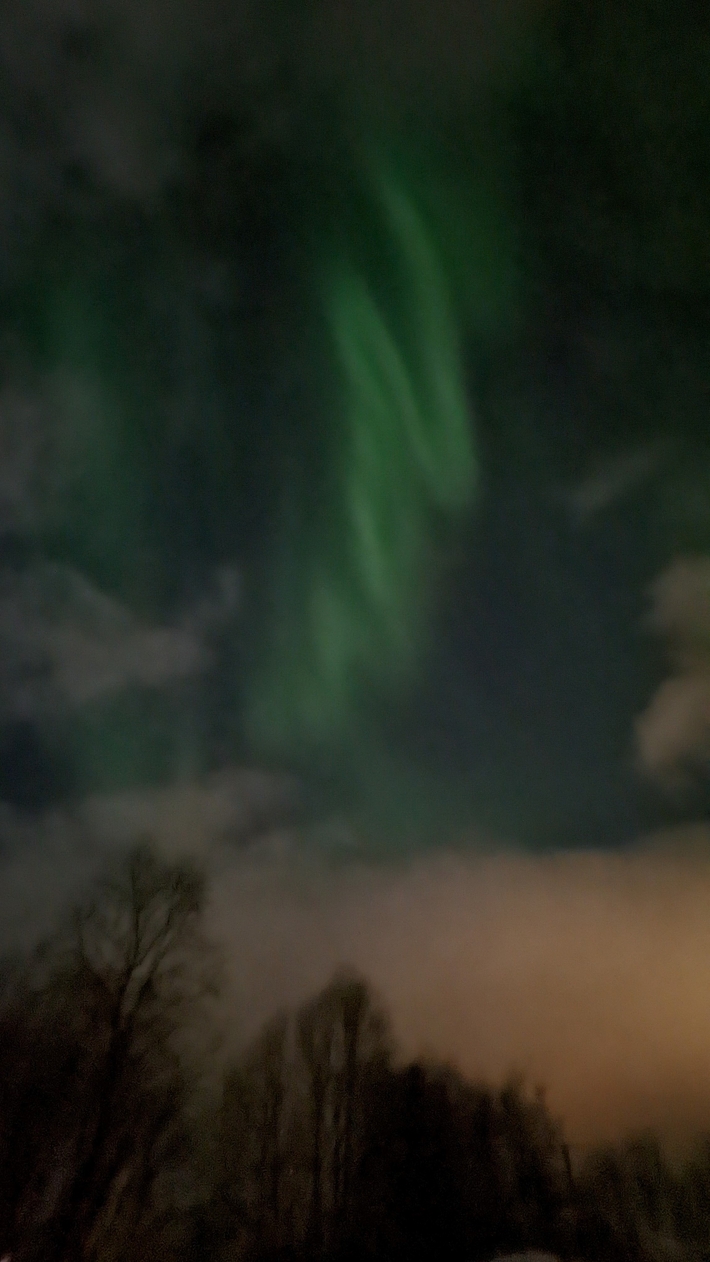
Northern light in Tromsø
In addition to seeing old friends, the trip to Karlstad also allowed me to expand my network and form new friendships. In the university, my supervisor connected me to other faculty members and colleagues who supported me in the project. During lunch time especially, I was able to meet people from different disciplines in the Physics and Engineering department. Outside the university I met several new friends either through mutual acquaintances or chance meetings in social events. It is my hope that these new relationships will be future reasons for me to have another adventure in Sweden
Accommodation
In Karlstad University, there are dormitory accommodation near the university that can be used by exchange students staying longer than 3 months. Since the duration of my stay is shorter, Prof. Solis kindly arranged the accommodation near the city centre with easy access to the university and very beautiful view of the river right in front of the house. It was in a relatively big, old house with many rooms rented out for short-term visiting researchers and other doctoral students. During my stay, there were three other doctoral students and post-doctoral researcher living in the house on top of the landlady and her family. Some weekends we would have dinner or barbeque parties that was really helpful in breaking the ice between me, as a new tenant, and the other tenants. Despite these communal activities, the place also gave decent amount of privacy.
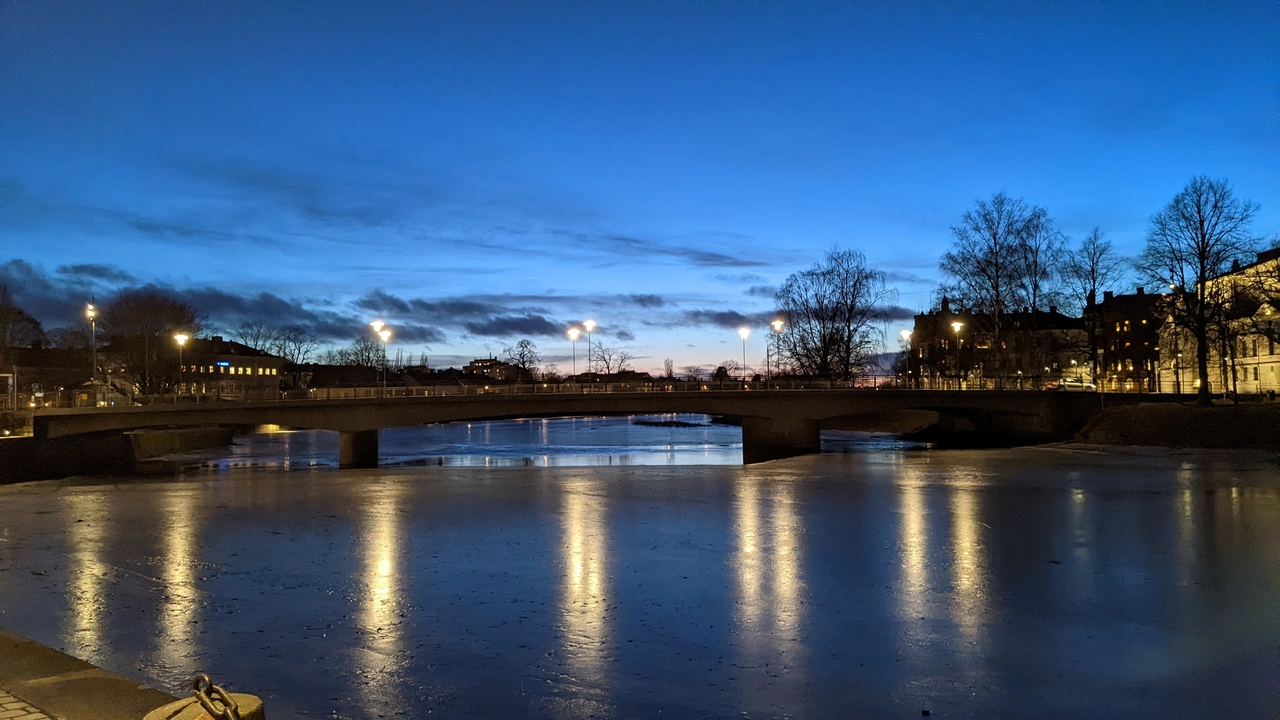
View more outside the accommodation
Expense Report
The living expenses in Karlstad included accommodation, transportation, communication, and daily needs expenses.
For the accommodation arranged by Prof. Solis, the rent was fairly reasonable for a place located right by the city centre at around €500/30 days. The accommodation came with basic furniture and homewares included, however depending on personal preferences and needs some other homewares (e.g., hangers, storage boxes, etc.) might need to be purchased.
A commuter pass for the bus can be purchased at the nearest Pressbyrån (i.e., convenience store) or the Karlstadbuss and Värmlandstrafik offices (the two bus operators in Karlstad). The cost for the card and the student monthly commuter pass was around 550 SEK; the commuter pass covers all trips in the city on the Karlstandbuss and Värmlandstrafik buses. Since each bus trip cost about 27 SEK, the commuter pass is very worth the price.
There are several telecommunication companies in Sweden with fairly similar coverages and service plans. The standard plans are phone, SMS, and internet with different quotas. Some of the service plans also provide internet in other Scandinavia and EU countries while some only provide services in Sweden. Therefore, it is important to do some research and read the fine prints of the service before the departure. The SIM card can be purchased at any Pressbyrån and the service plans can also be renewed there. The SIM card for Comviq, the company I used, cost about 45 SEK, while 3 GB of data for 30 days with EU coverage cost about 145 SEK.
Finally, the daily expenses for food, toiletries, etc. were slightly more expensive than the expenses in Tokyo. Depending on lifestyle, diets, and preferences, anything between 4000 to 5000 SEK should be sufficient to cover these expenses.
Miscellaneous(Outcomes)
Overall, I think I fulfilled the goals that I set for myself in the exchange program which were gaining new experience in a different field, experiencing new working condition, and widening my professional and personal network. It was unfortunate that the duration of the exchange had to be shortened due to the pandemic situation, but I was able to fill everyday I was there with meaningful activities.
Miscellaneous(Message for future students)
I would recommend other students to look for experiences outside their comfort zones, academically and culturally. I started as an exchange student in Tokyo Tech during my bachelor years, continued to do my graduate studies here, and was given the opportunity to expand my horizon through SERP. The time I spent in Sweden have also opened future possibilities that I would not have been aware of were I did not go to Karlstad.