. Any information published on this site will be valid in relation to Science Tokyo.


TAIST-Tokyo Tech Student Exchange Program in Thailand (SERE) 2023
Year of Study: |
D1 |
|---|---|
School: |
Civil Engineering |
Country / Region: |
Thailand |
University / Institution: |
Thailand National Science and Technology Development Agency(NSTDA) |
Program Duration: |
October 3 - November 25 |
Program Name: |
Overview of the program and the host organization abroad
The TAIST - Tokyo Tech Student Exchange Program provides internship opportunities to Tokyo Tech students. The program connects students with professors/supervisors from Thailand to conduct joint research deemed appropriate for both parties.
The National Science and Technology Development Agency is comprised of various research institutes. I was assigned to Image Processing and Understanding team in NECTEC. The institute and research team focus on applications mostly related to artificial intelligence.
Pre-departure preparation
All relevant information was relayed by the staff from the International Affairs Division (TAIST Office). The guide was very detailed and almost everything the student needs to know is already included inside.
Visa:
The required visa to apply for a short-term stay is Non-Immigrant ED Visa (For Students Enrolling at Formal Educational Institutions in Thailand Approved by Thai Authorities). I just need to go to the Thailand embassy website, schedule an appointment, fill out forms and complete the requirements, and then appear for the scheduled appointment. The visa application on the day was smooth, and the results will be available about a week after the application.
Accommodation:
With this program, accommodation is provided by the host institution.
Finding a host supervisor:
I found my supervisor with the staff’s help. I just provided the specific institution and study area I am interested in. Staff will try their best to match me with a supervisor that fits my study area.
Study abroad in terms of field of study:
It is important for us to know what we really want to achieve during the study abroad. We need to relay to our prospective supervisor what we want to learn during the study period, then find a sweet spot where the student’s and supervisor’s specialties will align.
Academic activities during study abroad
I did mostly research during my stay. My supervisor tried to connect the study that is currently being done by the research team and what is my research background. I was thankful that he adjusted to my specialty and tried to maximize it so I could both learn and teach at the same time. I did a short workshop at the end of the internship about simple data acquisition and visualization using Google Earth Engine.
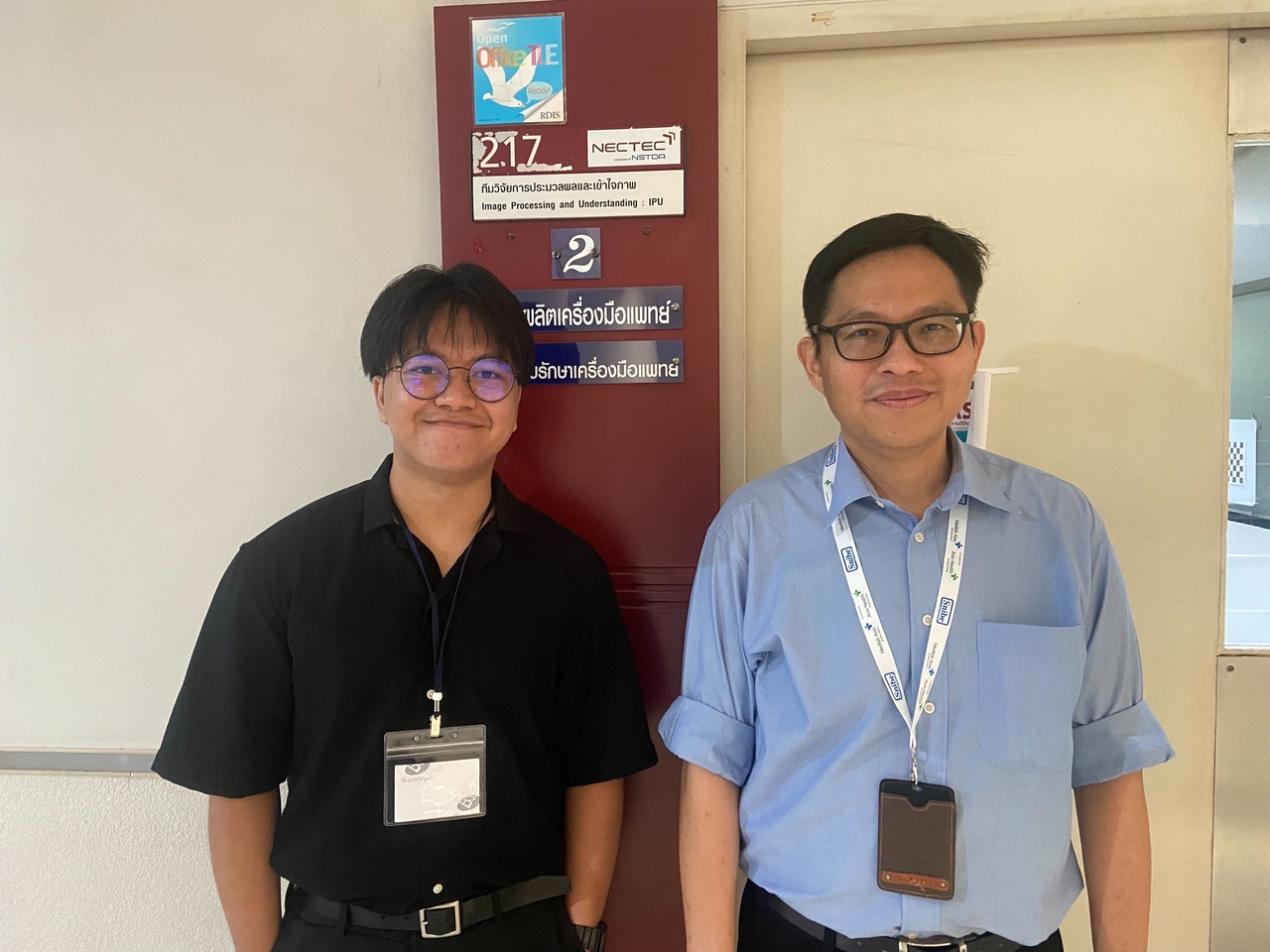
With the host researcher in NECTEC
Episode in which you experienced personal growth or development
I felt growth when my supervisor asked me to do a workshop for the whole team. Since I specialize in Geospatial Analysis, the research team got interested in it. As an intern, I did not expect to be given a huge responsibility to share some information from my background. I hope I was able to give them at least a brief introduction to the topic.
Study abroad expenses
I would like to share some rough estimates of the expenses:
• Living expenses + travel: ~100,000 JPY
• Accommodation: FREE
• Insurance fee: ~25,000 JPY
• Flight: ~80,000 – 90,000 JPY
Accommodation at the destination
The dormitory was provided for free so there was no application process required. In regards to my roommate, I think we clicked really well. Since the first day I arrived, we were able to share our own stories, hobbies and even played table tennis together. We were able to adapt to each other's room habits and respected each other's privacy and sensitivities. I would say it was great to have the roommate I had.
Language at the destination
Same as Japan, Thailand also barely speaks English. It has been difficult day-to-day to adapt and communicate with people. Although, my office mates speak good English. Outside the office, especially, ordering food and traveling around, it was not easy. It is necessary to be creative in order to survive every day. It could be using a translation app or just pointing to the menu. But of course, always remember to smile.
Recognition of credits which you took at the university
I will apply for credit recognition for a course in Tokyo Tech called “Off Campus Project in Civil Engineering”.
How do you make use of your study abroad experience in your future life?
For me, it is the experience outside the research lab. What I got from this study abroad is how I should communicate with workmates, supervisors, and strangers, regardless, whether we speak the same language or not. Respect should always be present.
Indicate trouble or issues you experienced during study abroad
I would say the only trouble I encountered was the language barrier. Aside from that, maybe it is more appropriate to give advice in the next chapter.
Advice to other students
• Seize the opportunity, especially, for a study abroad. Don’t get intimidated even if it is not an English-speaking country. You will survive, at the end of the day.
• Communicate well with your supervisor.
• If you are capable, try to learn the language before your trip.
• Try to study the best way to travel cheaper, especially, during the first week. What transportation to use going to the accommodation, what sim card to buy, etc. Do your research.
• Don’t forget to have fun and go for travels during the weekends.